


The semi-professional years
1912 to 1919

Over the next three years, the Jeffersons go from obscurity to appearing regularly in the sports pages of Rochester's major newspapers. By 1915, the team is decked out in bright red uniforms with a distinctive logo across the front of the jersey. This was not common anywhere in the country in 1915, an entire team wearing matching uniforms with a custom logo. This was brought about when Leo had the idea and asked his childhood friend what color the team should use. "Bright red like blood, the color of your sport" referring to the violent nature of football. The friend was Walter Hagen, future pro golf world champion, who played baseball and golf but not football. This was Leo's plan, stand out from all the other teams.


1916, the "Jeffs" beat Buffalo to win the New York State football championship. After a disputed ending, Leo wrote to Walter Camp for his thoughts on who the victor should be. Camp sides with Rochester!


Sheehan's Field
12 corners in Brighton 1910

Walter Hagen


COPY PROVIDED BY YALE UNIVERSITY ARCHIVES, SPECIAL REQUEST 2024


Roch D&C Dec 12, 1916 Page 23
The 1916 Rochester Jeffersons


.jpg)
Still interested in forming a new pro football league, Leo reads about teams in Ohio who have mentioned the notion. Looking to make his team known to those popular teams out west, Leo challenges Jim Thorpe and the Canton Bulldogs to a game. They were the most dominant team in the nation by far, crushing teams by scores like 56-0 and 70-0.
The "Jeffs" travel to Canton and lose 41-0. After the game, Leo briefly talks with Thorpe and Jack Cusack about forming a new pro football league. Thorpe tells Leo to keep in touch and when they do plan on starting one, Leo would be informed. 3 years later, it happens!


Leo Lyons
Jim Thorpe
Roch D&C Oct 28, 1917 Page 34
1918 was a tough year, World War 1 and the Spanish Influenza pandemic drained football teams of players and fans. Many were drafted and many died from the fast moving sickness. Travel bans and players/soldiers coming back and forth from war and home furloughs made scheduling games difficult but it worked for some teams. Some teams were dormant for the 1918 season with no championships awarded in any sports. The "Jeffs" played several military teams in 1918.


Jim Thorpe giving kicking exhibition prior to the 1917 game vs. the Rochester Jeffersons

Roch D&C Oct 16, 1918 P 21
Roch D&C Oct 25, 1918 P27


Baseball Park
(Bay Street Ball Park)


Leo Lyons and wife Catharine with their 2 daughters
The Jeffs lose to Buffalo in a rematch game (first ended in tie in a snowstorm) for 1919 state championship
George Halas in NY Yankees uniform 1919. Leo turned Halas down when he was looking for an established football team to join.

1919 Rochester Jeffersons vs. All-Lancaster at Baseball Park, Rochester
( Along Bay St. & Webster Ave.)
Referee Herbert Benzoni, far right
"Jeffs" RB Henry McDonald, in front of Benzoni
"Jeffs" QB "Red" Quigley
"Jeffs" C Arthur Sherman Webb, with ball
Photo courtesy of Gary Maybee


.jpg)
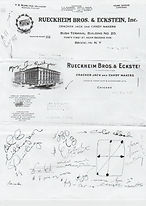
Leo jotted down things from the 1917 season
Henry McDonald, (left to right) Jeffersons 1917, Lancaster 1914, Colored All-Stars 1916
Leo Lyons 1915
Henry McDonald faced racism as a black player in a mostly white game at this time. Leo not only recruited him, but chronicled incidents that transpired against Henry during his football career. These notes, including NFL history, were written down on any paper he could find. which included Saturday Evening Posts. Leo once said that the posts made "good stuffing" for players padding.
During his seven-year career, McDonald recalled but one negative racial incident. The unfortunate episode occurred in 1917, when McDonald and the Rochester Jefferson’s team traveled to Ohio to meet the Jim Thorpe-led Canton Bulldogs. The trouble began when Canton’s Earle “Greasy” Neale threw McDonald out of bounds and made his feelings concerning the black player quite clear. Neale snapped, “Black is black and white is white where I come from and the two don’t mix.” McDonald, an accomplished boxer, stood ready to answer Neale’s challenge, when unexpectedly Jim Thorpe intervened. “We’re here to play football,” McDonald recalled Thorpe sternly telling his teammate. “I never had any trouble after that,” he said. “Thorpe’s word was the law on that field.”
Joe Horrigan